

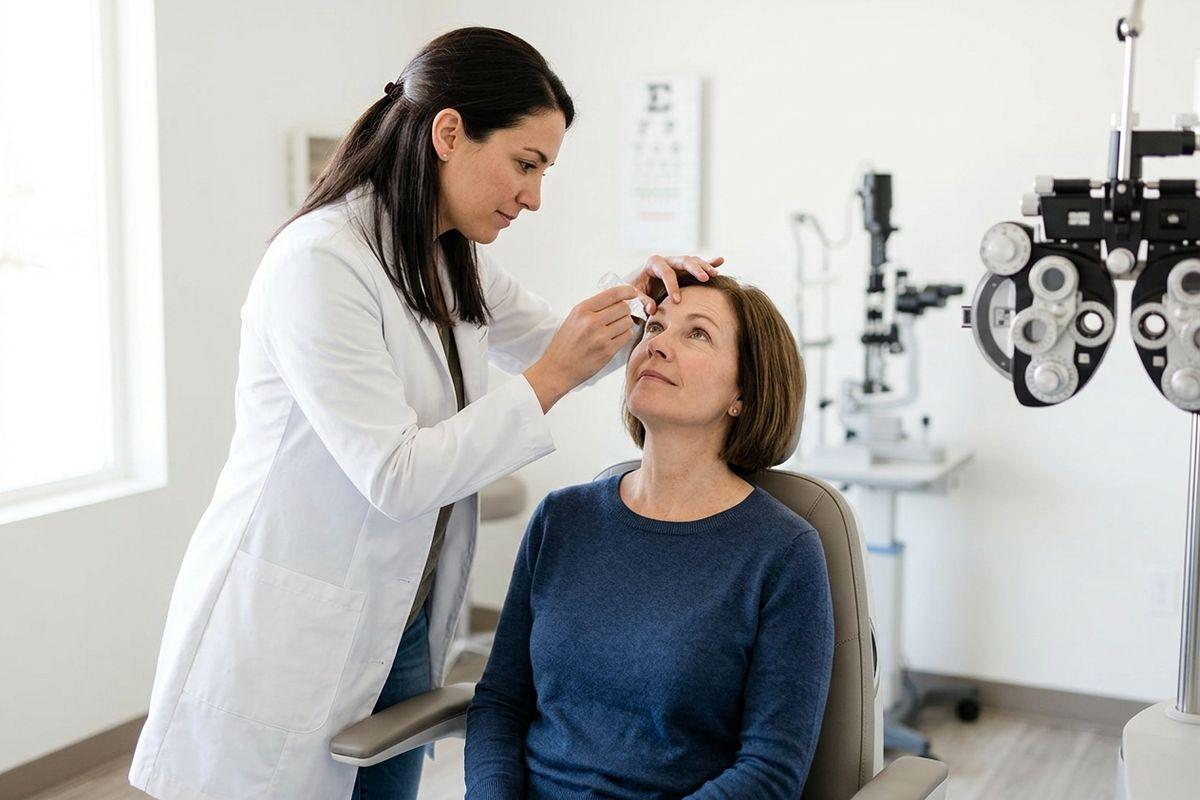
Not every eye exam includes dilation, so when your optometrist reaches for the drops, there’s a reason behind it. Plenty of patients go along with it without asking why.
Your optometrist dilates your eyes so more light can reach the back of the eye, giving them a wider view of the retina and optic nerve, where early changes often appear first. Dilation adds about 15 to 30 minutes to a comprehensive eye exam, so it helps to know how long your visit might run before you pick a time.
What Eye Dilation Means For Your Visit
The drops relax the muscles that control your pupil. Your pupil widens and stays that way for a few hours, letting far more light pass through than usual.
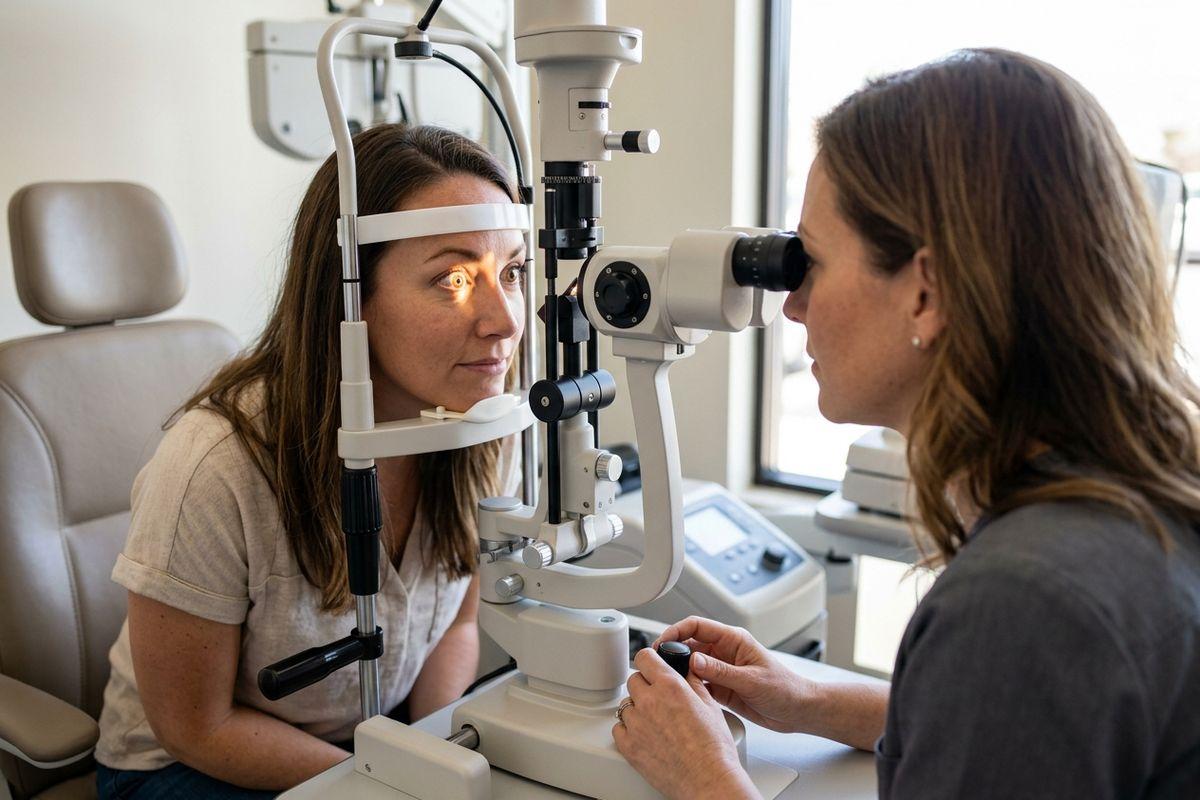
With that bigger opening, your optometrist gets a clear view of the back of your eye instead of peering through a small gap. Think of it like opening the curtains in a dark room. Suddenly everything inside is easy to see.
Why The Doctor Dilates Your Eyes
Your retina and optic nerve sit deep inside the eye. They carry information about blood vessel health, nerve tissue, and pressure damage that a surface-level look simply can’t provide.
Plenty of eye conditions develop quietly. Your vision can feel completely normal while something changes at the back of the eye, and by the time you notice a difference in daily life, more damage has often already occurred.
Dilation helps with kids, too. Children tend to over-focus during a standard prescription check, which throws the numbers off. Relaxing that focusing effort lets the optometrist measure your child’s true prescription rather than a moving target.
Conditions A Dilated Exam Can Reveal
A clear view of the retina lets your optometrist watch for problems that rarely announce themselves early on. Here’s what a dilated exam can bring to light:
- Glaucoma and other optic nerve changes
- Diabetic eye changes that affect blood vessels in the retina
- Macular degeneration in its earlier stages
- Retinal tears and detachments
- High blood pressure showing its effects in the eye’s blood vessels
Spotting any of these early gives you and your optometrist more room to plan next steps together.
What Dilation Feels Like
After the drops go in, you wait about 15 to 30 minutes for them to take full effect. Some people feel a mild tightness around the eye, though the process stays comfortable overall. You can chat, scroll your phone, or relax while the drops work.
Once dilated, you’ll probably notice your close-up vision turning blurry and bright lights feeling harsh. Most people notice these effects fade within 4 to 6 hours, though it can run a little longer for some.
How To Prepare For Your Dilated Eye Exam
A little planning makes the rest of your day smoother. Pack a pair of sunglasses for the trip home, since daylight feels stronger than usual once your pupils are wide open.
Arrange for someone to drive you, too. Your near vision stays blurry for a few hours, so a family member or friend behind the wheel takes the stress out of the trip. Save close work for another time. Fine print and detailed screen tasks can wait until your focus returns. If you work in a bright environment or spend your afternoon outdoors, booking a later appointment may serve you better.
How Often Should You Get One?
Adults 60 and older generally benefit from a dilated exam each year, since the odds of age-related changes increase over time. Talk with your optometrist about what makes sense for you.
Your check-up schedule may look different from someone else’s. Diabetes or a family history of eye disease raises the chance of quiet changes inside the eye, so your optometrist might suggest checking in every 6 months.
Children benefit from yearly exams as their vision develops, especially before they start school or take on heavier reading loads.
Give Your Eyes A Closer Look
Dilation costs you a few extra minutes and a blurry afternoon. In exchange, your optometrist gets information no other part of the exam can provide.
At Dr. Jennifer L. Shane & Associates, we’re happy to explain anything you want to know about the drops, the equipment, or what shows up on the exam. No question is too small, and nothing about your visit needs to feel like a mystery.
Book your appointment and find out what a wider view can tell you about your eye health.