


You might notice changes in your vision as you age and wonder if you’re dealing with an eye disease, like macular degeneration or glaucoma. These terms get thrown around often, and many people think they’re similar conditions that affect older adults.
Macular degeneration and glaucoma are completely different eye diseases that affect different parts of your eye and cause distinct types of vision loss. Understanding the differences can help you recognize symptoms early and seek the right comprehensive eye care for your family’s eye health.
What Are Macular Degeneration And Glaucoma?
Macular Degeneration Explained
Macular degeneration happens when the light-sensitive tissue in the center of your retina breaks down. This area, called the macula, handles your central vision—what you see when you look straight ahead. Age-related macular degeneration affects millions of Americans and can significantly impact daily activities.
The condition affects your ability to read, drive, and recognize faces. Most cases develop in people over 60, which is why it’s often called age-related macular degeneration.
Glaucoma Explained
Glaucoma refers to a group of diseases that damage your optic nerve. This nerve carries visual information from your eye to your brain, like a cable connecting a camera to a computer. This serious eye disease requires prompt attention and ongoing management.
High pressure inside your eye often causes this damage, though it can happen with normal pressure too. Glaucoma typically affects your peripheral vision first—the areas you see out of the corners of your eyes.
Key Differences Between These Eye Conditions
Where They Affect Your Vision
The location of vision loss helps distinguish these conditions. Macular degeneration creates problems with your central vision, making it hard to see details directly in front of you. You might notice early warning signs that affect your daily activities.
Glaucoma works the opposite way. It usually starts by affecting your side vision, creating blind spots you might not notice at first.
What Parts Of Your Eye They Target
These diseases damage different structures in your eye. Macular degeneration specifically targets the macula in your retina—the tissue that lines the back of your eye.
Glaucoma attacks your optic nerve, which sits at the back of your eye where all the nerve fibers come together. Think of it as the difference between damaging the film in a camera versus cutting the wire that sends the picture.
Warning Signs To Watch For
Macular Degeneration Symptoms
You might notice these changes if you’re developing macular degeneration:
- Blurry or fuzzy central vision
- Dark or empty spots in your central vision
- Straight lines appear wavy or bent
- Colors seem less bright
Glaucoma Symptoms
Glaucoma symptoms can be tricky to spot because they often develop slowly. Learning to recognize early signs of glaucoma could help preserve your vision:
- Loss of side vision
- Tunnel vision in advanced stages
- Severe eye pain or headache in acute cases
Many people call glaucoma the “silent thief of sight” because you might not notice symptoms until significant damage has occurred.
Which Condition Is More Serious?
Both Can Lead To Vision Loss
Both conditions pose serious threats to your vision. Glaucoma ranks as the second leading cause of blindness worldwide, while macular degeneration tops the list for vision loss in Americans over 60. According to national vision statistics, these conditions affect millions of people.
The key difference lies in timing—early detection and treatment can help preserve your remaining vision for both conditions. However, you cannot restore vision you’ve already lost.
Treatment Options Available
Your treatment options depend on which condition you have and how far it’s progressed. For glaucoma, eye drops can often slow progression by reducing eye pressure, and surgery might help in advanced cases.
Macular degeneration treatment varies by type—some respond well to special injections or laser treatments.
Professional eye disease diagnosis and management is essential for both conditions. While we can’t cure either condition completely, we can often slow their progression significantly.
How Regular Eye Exams Help
Early Detection Matters
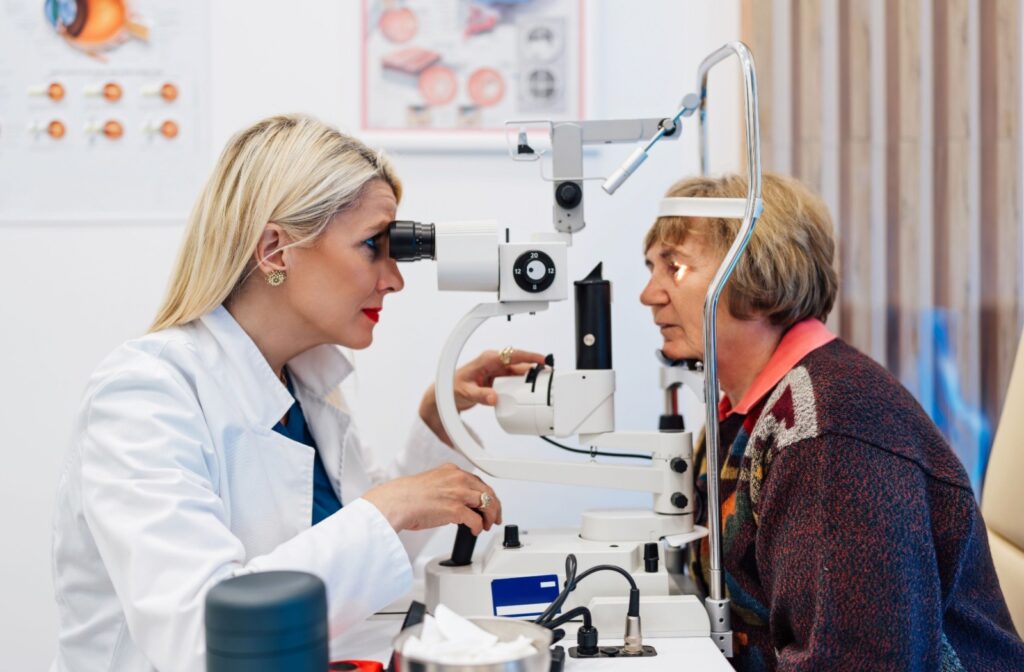
Comprehensive eye exams can catch both conditions before you notice symptoms. During a dilated exam, your optometrist can see changes in your retina and optic nerve that may indicate early disease.
We use modern imaging technology to detect subtle changes that might not show up in a basic vision screening. If you’re over 60, annual exams give us the chance to monitor your eye health closely.
What Happens During Your Visit
Your comprehensive exam includes several tests to check for both conditions. We measure the pressure inside your eyes to screen for glaucoma and examine your retina in detail to look for macular degeneration signs. Specialized glaucoma testing helps detect changes before symptoms appear.
We also test your visual field—how well you can see in different areas—which helps us detect early glaucoma changes. These tests work together to give us a complete picture of your eye health.
Protecting Your Vision In Reno
Risk Factors You Should Know
Several factors increase your risk for both conditions. Family history plays a major role. If your parents or siblings had either disease, your risk goes up. Understanding whether glaucoma is hereditary can help you take preventive steps.
Age remains the biggest factor you can’t control, but other health conditions matter too. High blood pressure can contribute to both diseases, while smoking specifically increases your macular degeneration risk.
Steps You Can Take Today
You can take action to protect your vision starting now. Schedule regular comprehensive eye exams—they’re your first line of defense against both conditions.
At home, you can monitor changes in your vision with simple tests like covering one eye at a time to check for differences. Maintaining healthy blood pressure and protecting your eyes from UV light with sunglasses also help reduce your risk.
Protect Your Vision Today
Our team in Reno at Dr. Jennifer L. Shane & Associates understand how important your vision is to your family’s quality of life. We use modern technology to help detect these conditions early, when treatment can be most effective. Don’t wait until you notice vision changes—schedule your comprehensive eye exam today to protect your sight for years to come.